Product descriptions are full of fabric names that sound familiar yet are hard to picture: nida, crepe, georgette, chiffon, satin, jersey, linen blend. If you shop online, understanding these words is the difference between receiving a garment that feels exactly as you hoped and one that surprises you. This fabric glossary explains the textiles you will meet most often in modest clothing, how each one feels and drapes, which climates and occasions suit it, how to care for it and how to read fiber percentages and weights on a label. Use it as a reference whenever you are unsure what a fabric really is.

Why a Fabric Glossary Matters
Two garments with the same design can feel completely different depending on the fabric. One may be cool and airy, the other warm and heavy. One may resist wrinkles after hours in a suitcase, the other may crease the moment you sit down. Fabric affects comfort, opacity, maintenance, durability and even how a garment moves. Knowing a handful of terms helps you choose confidently, particularly for modest dressing where layers, sleeves and length are important.
Nida
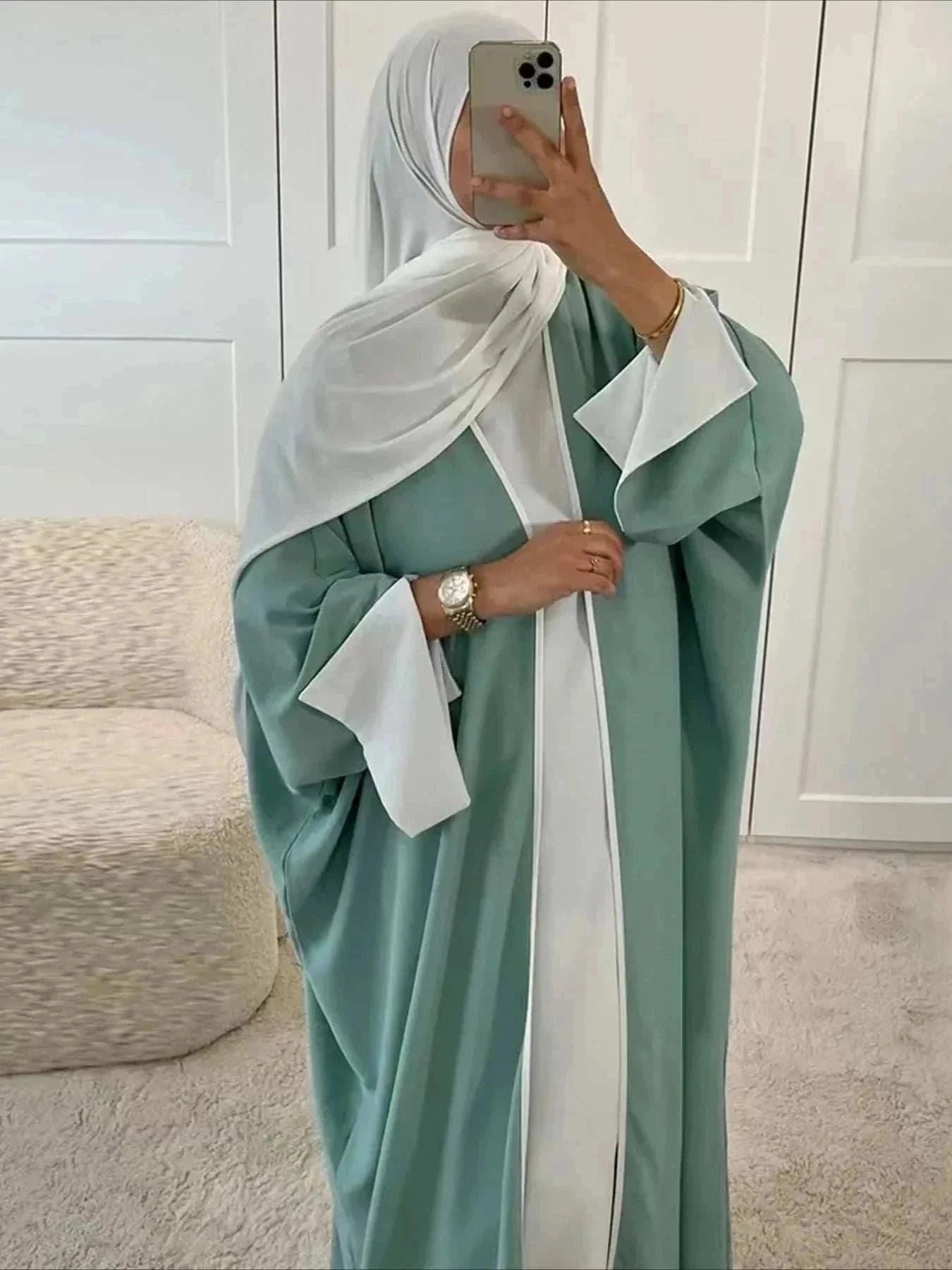
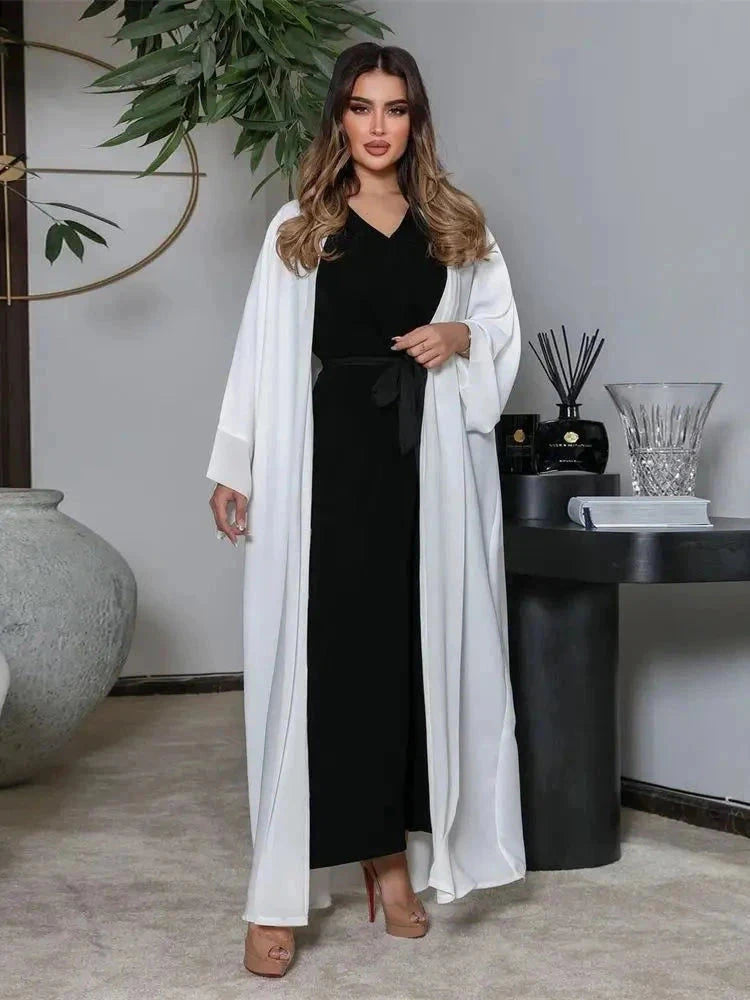
Nida is a smooth, soft polyester fabric with a slight sheen and a fluid drape. It is lightweight, naturally wrinkle-resistant and very popular in the Gulf region for everyday outer garments. Nida holds its shape well, is easy to wash and dries quickly, so it works for busy days and travel. It is not as breathable as cotton, so in very hot weather choose looser cuts.
Crepe
Crepe has a fine, slightly pebbled surface created by twisted yarns. It drapes well, resists creasing and feels substantial without being heavy, which is why it appears in blazers, cardigans and structured dresses. Crepe is a dependable choice for professional outfits and long days. See how it can look in our ice silk crepe cardigan.
Georgette
Georgette is a sheer, lightly crinkled fabric, similar to chiffon but with a little more texture and body. It flows beautifully and is often used for layered garments and scarves. Georgette is more opaque than chiffon but still light, making it comfortable in warmer weather.
Chiffon
Chiffon is very light, sheer and airy, ideal for sleeves, overlays and flowing outer layers. It is delicate, so it can snag, and it needs gentle washing. Read our guide to washing chiffon for care steps, and browse our chiffon abayas to see how it moves.
Satin
Satin is a weave rather than a fiber, with a glossy face and a matte back. It drapes luxuriously and catches the light, which makes it popular for evening wear. Polyester satin is more affordable and durable than silk satin, but both can snag and show water marks. Our satin abayas show the range from soft sheen to high shine.
Silk and Ice Silk
Keep this fabric glossary handy whenever a description names a material you do not recognize.
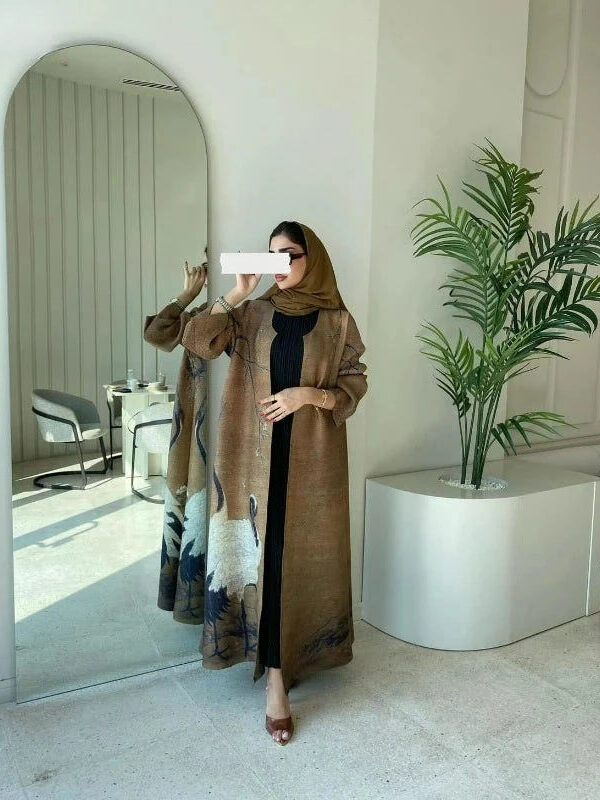
Natural silk is prized for its smoothness and breathability but needs careful care. Ice silk, a cool-to-the-touch synthetic often used in warm-weather clothing, feels smooth and silky and tends to resist wrinkles. Both give an elegant, fluid drape. Browse our silk abayas for examples.
Jersey
Jersey is a stretchy knit that is soft, breathable and comfortable. It moves with the body, rarely wrinkles and works well for everyday layers, prayer wear and travel. Heavier jersey provides more warmth, while lighter jersey suits milder days. Explore our jersey abayas for stretch comfort.
Cotton and Cotton Blends
Cotton is breathable, absorbent and easy to wash, though it wrinkles unless blended with polyester or another fiber. A cotton blend balances comfort with easier care, which is useful for daily clothing and hot climates. See our cotton abayas.
Linen and Linen Blends
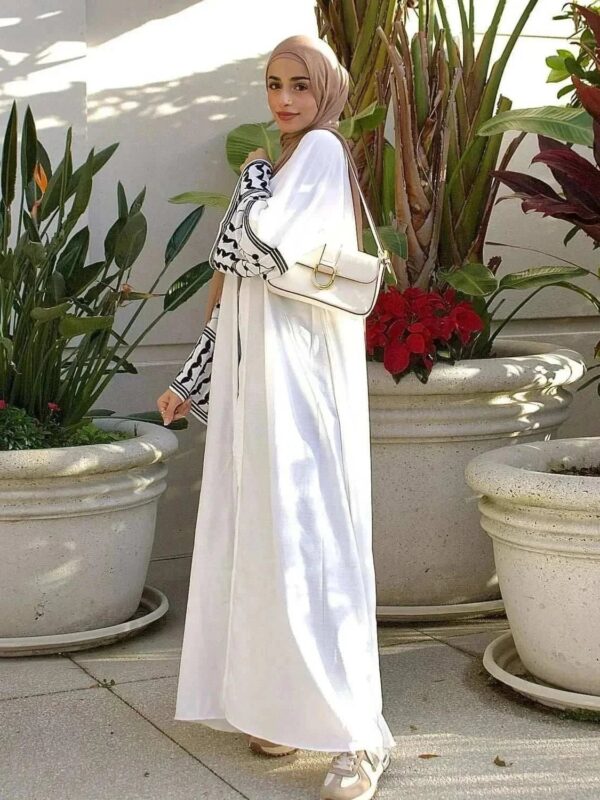
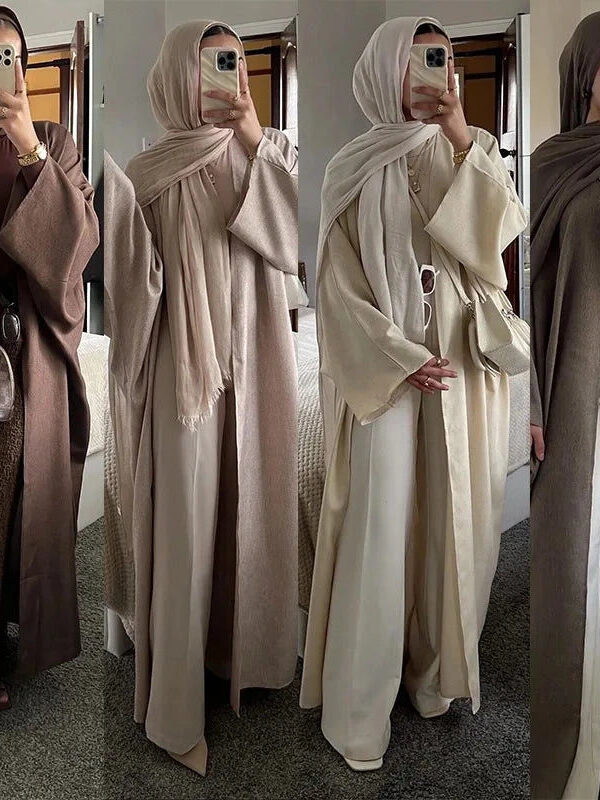
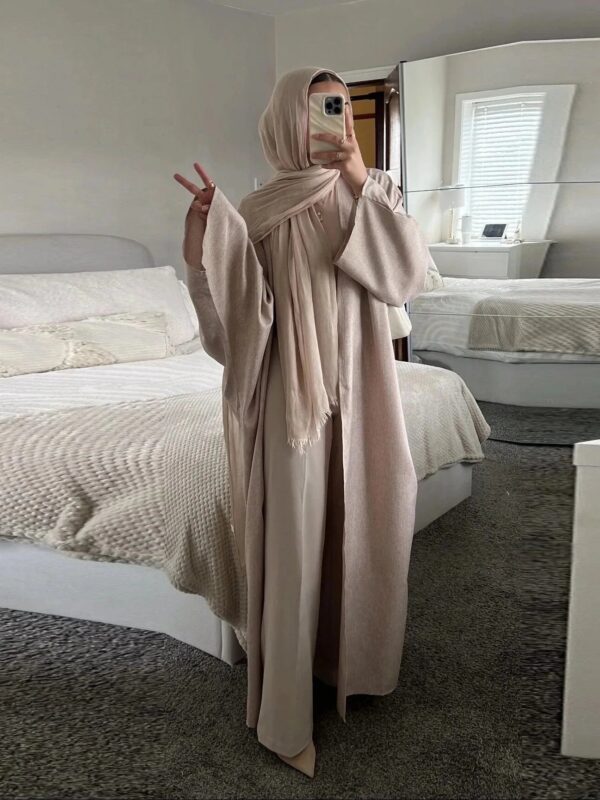
Linen is cool, airy and strong, with a natural crisp texture that softens over time. It wrinkles easily, which many people find part of its charm. Linen blends reduce creasing while keeping much of the coolness.
Velvet
Velvet is a dense pile fabric that feels warm, soft and rich. It suits cold weather and formal occasions but should be steamed rather than ironed to protect the pile. Look at our velvet abaya for an example.
Fabric Glossary Quick Comparison
The warmest fabrics are velvet and heavy crepe. The coolest are linen blends, ice silk and chiffon. The least wrinkling are nida, crepe and jersey. The most delicate are chiffon and satin. If you want one fabric that does a bit of everything, a mid-weight crepe or nida is hard to beat.
How to Read Fiber Percentages and Weights
Labels list fiber content as percentages. A fabric listed as polyester with a small amount of elastane has some stretch and keeps its shape. Natural fibers such as cotton or linen increase breathability. Fabric weight, measured in grams per square meter, tells you how light or heavy a fabric feels. Lower numbers feel airy, higher numbers feel warmer and more structured.
Fabric Glossary Care Notes for Different Fabrics
As a general rule, wash delicate fabrics by hand in cool water, air dry away from direct sun and steam rather than iron. Sturdier fabrics such as cotton and jersey tolerate gentle machine washing. Our guides to steaming versus ironing and making your clothes last longer cover care in more depth.
Frequently Asked Questions
Here are quick answers to common questions this fabric glossary raises.
Which fabric is best for hot weather?
Linen blends, light cotton, ice silk and chiffon are the coolest choices.
Which fabric lasts longest?
Tightly woven polyester crepe and cotton blends usually hold up best.
Is nida the same as crepe?
No. Nida is smooth and soft, while crepe has a pebbled texture, though both drape well and resist wrinkles.
What is the difference between chiffon and georgette?
Chiffon is lighter and more sheer, while georgette has more texture and body.
For wider background reading, see Wikipedia’s overview of textiles.
Final Thoughts
Use this fabric glossary as a reference every time you shop, and fabric names will stop being a mystery.
Knowing these fabric terms makes online shopping far easier. Match the fabric to your climate, occasion and care preference, and you will choose garments that feel as good as they look.